Moving prices on the Costa del Sol
Move only
Everything already packed
€399–629
- Two movers, van, fuel and tolls
- Loading, transport and unloading
- Furniture protected in transit
- Goods in transit insurance
- No boxes supplied
- You pack everything yourself
- Contents you packed aren't covered
Packed and moved
You lift nothing, you buy nothing
€849–1,190
Packing adds €450 — a full day, two people
- Everything in Move only
- Our packing team, a full day before
- Reusable crates included for 21 days
- Paper, bubble wrap, plate and glass dividers
- Everything we pack is insured
- Nothing for you to buy or dispose of
Fully managed
You just turn up
€1,090–1,490
Unpacking and exit clean add €280
- Everything in Packed and moved
- Unpacked into cupboards and wardrobes
- Beds made, kitchen ready to use
- Crates taken away the same day
- Exit clean and deposit-ready handover
Ranges cover access, volume and distance across the coast. Your price is fixed after a free video survey — and it never goes up. A ten-minute WhatsApp video call turns the range into one number, in writing, before you book. No visit needed, no obligation.
Why we don't pack in your boxes
Almost all breakages happen inside badly packed boxes. We only pack in our own crates and materials — that's how we can insure what's inside them. If you'd rather pack yourself, choose Move only and we'll handle the heavy lifting.
| Aspect | Your own boxes | Our crates |
|---|---|---|
| Cost | You buy them | Included for 21 days |
| Insurance | Contents not covered | Contents covered |
| Assembly | You flat-pack and tape each one | Nothing to assemble |
| Afterwards | You dispose of them | We take them away |
| Strength | Cardboard sags in damp garages | Stackable, waterproof |
Add to any package
Fragile-only packing
Kitchen, glass and art packed by us, the rest left to you. From €240.
Exit clean
Your old place handed back clean, so the deposit comes back. From €180.
Extra crate weeks
€35 per week after the first 21 days, if your move runs long or goes into storage.
Storage collection
We move you into the storage unit of your choice and out again when you're ready. Quoted at survey.
Flat-pack wardrobes that have been taken apart before rarely survive a second rebuild. We'll tell you if we think yours won't — before you pay for it.
Ignoring dull or hazy marble allows damage to worsen. More extensive work will be required later. Everyday foot traffic and spills create micro-scratches. These accumulate, making the stone appear permanently dirty.
Unaddressed limescale buildup in bathrooms is common in coastal properties. It can lead to deep etching that penetrates the stone. This damage is difficult to remove without professional intervention. Costly repairs may be needed.
Acidic spills on kitchen or vanity countertops create immediate etch marks. These dull the finish. If left untreated, marks can become permanent discolorations. This diminishes the property's aesthetic value.
How Marble Polishing is performed
The marble surface is inspected — A thorough assessment identifies the marble type, existing damage, and desired finish. This step ensures correct tools and techniques are selected for optimal results.
The area is prepared and protected — Surrounding furniture and surfaces are covered. This prevents dust or slurry contamination. Containment is crucial for maintaining a clean work environment.
Grinding removes deep imperfections — Diamond abrasives remove deep scratches, etch marks, and unevenness. This stage effectively resurfaces the stone, revealing a fresh layer.
Honing creates a smooth, uniform finish — Finer abrasives smooth the surface after grinding. This step prepares the marble for polishing. It can achieve a matte or satin look if desired.
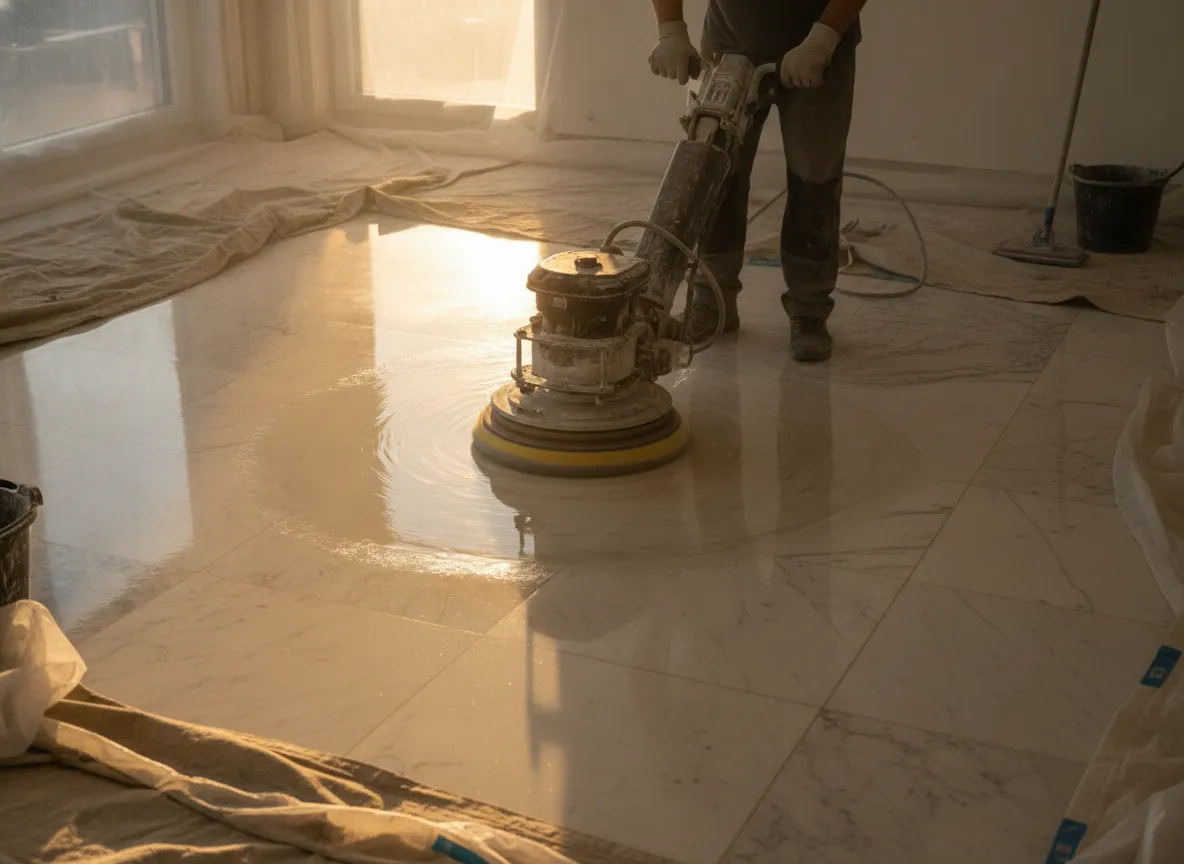
Polishing restores the stone's shine — Specialized polishing compounds and pads bring out the marble's natural luster. The process enhances clarity and reflectivity to the desired level.
The surface is cleaned and sealed — After polishing, the marble is thoroughly cleaned. This removes any residue. A penetrating sealer is then applied to protect against future stains and spills.
3 things to know about Marble Polishing
Minor damage can worsen
Small surface imperfections, like light scratches or dull spots, can deepen over time. Continued use and cleaning contribute to this. Addressing these issues early prevents them from becoming more extensive. This also makes them less costly to repair later.
Acidic spills cause etching
Marble is sensitive to acids. These are found in many common household cleaners, foods, and drinks. Even brief contact can cause etch marks. These marks dull the stone's finish. Prompt cleaning and professional polishing are essential to restore the surface.
Limescale leads to discoloration
Hard water is prevalent in many areas. It contributes to limescale buildup, especially in bathrooms. If left unaddressed, this can lead to irreversible discoloration. Structural damage to the marble may also occur, requiring more intensive restoration.
We cover Marbella
Professional stone restoration services are provided across the western Costa del Sol. This includes comprehensive solutions for all types of marble surfaces in residential properties.
Is this what you are looking at?
Removing light scratches
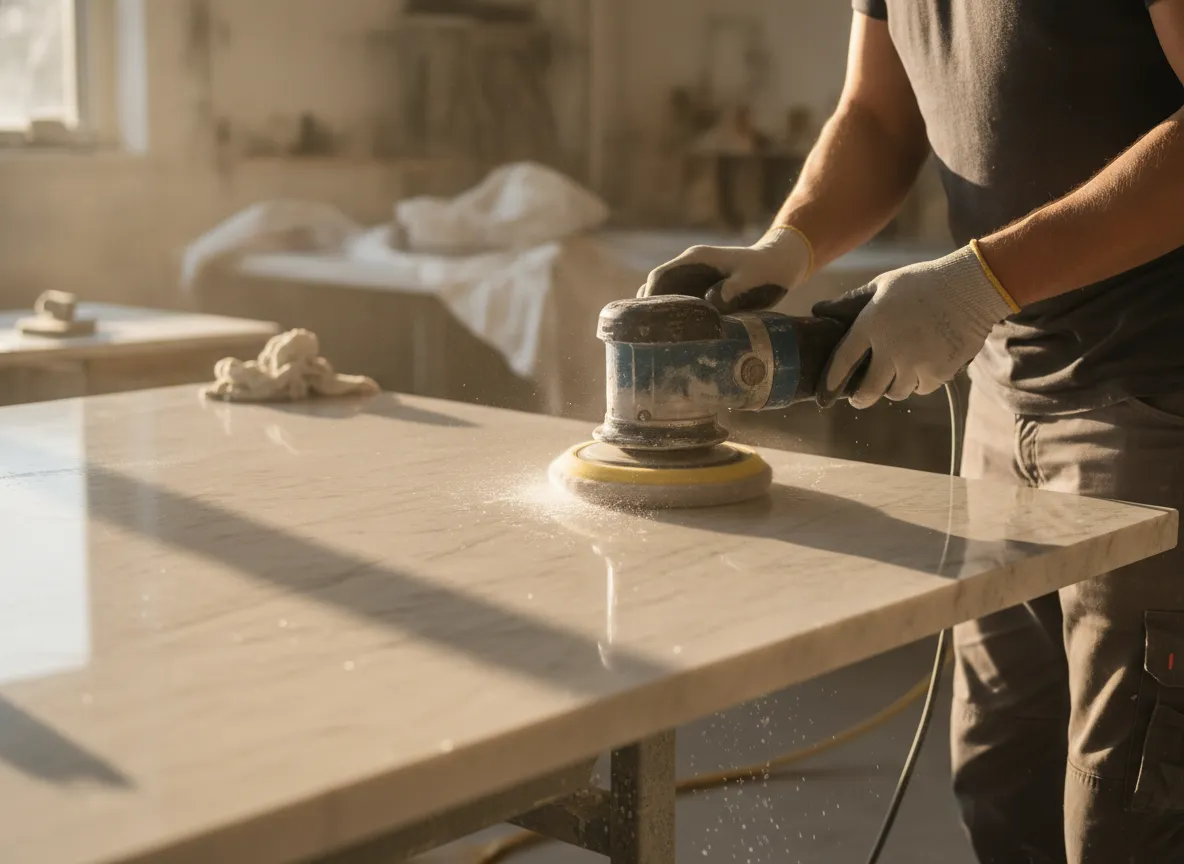
Over time, marble can develop minor surface scratches from everyday use. These shallow marks dull the stone's natural shine. The polishing process carefully abrades the top layer of marble to smooth out these imperfections. This restores the surface to an even finish. It helps bring back the original luster without needing deeper restoration work. Light scratches are often the first sign that polishing is needed.
Addressing dull spots
Dull spots on marble surfaces often result from acid etching or general wear. These areas lose their reflective quality and appear lifeless. Polishing works to re-establish a uniform sheen across the entire surface. It involves using fine abrasives to remove the damaged layer, revealing fresh stone beneath. This process ensures the marble regains its consistent, bright appearance. It is a common reason for professional marble care.
Sealing after polishing
After polishing, marble surfaces are more susceptible to new stains and damage. Applying a high-quality sealant is a crucial step to protect the newly refined stone. The sealant penetrates the marble's pores, creating a barrier against spills and etching agents. This protection helps maintain the polished finish for longer. It also makes routine cleaning easier and more effective, safeguarding your investment.
Restoring high traffic areas
Areas with heavy foot traffic or frequent use tend to show wear faster than others. These spots often become noticeably duller or more scratched. Focused polishing on these specific areas helps to blend them with the surrounding marble. It involves a careful assessment of the wear to apply the correct abrasive grades. This ensures a consistent finish across the entire surface. It prevents uneven appearance over time.
Polishing marble stairs
Marble stairs present unique challenges due to their shape, edges, and constant use. Each step requires individual attention to ensure a uniform polish and shine. The process involves careful handling of equipment to reach all angles and prevent damage. This restores the elegance and safety of the staircase. Polishing also helps to improve the grip slightly by removing slick, worn layers. It enhances both aesthetics and function.
Choose the right polishing method for your marble's condition
The initial state of your marble surface dictates the most effective polishing approach. If the marble shows significant wear, scratches, or a general loss of shine, a more intensive method is typically required to restore its appearance. Less damaged surfaces might only need a lighter treatment to enhance their existing gloss.
Different materials and systems are available, each suited for specific conditions. Diamond abrasive pads are used for grinding and honing, removing deeper imperfections. Polishing powders or compounds, which contain abrasives and acids, react with the marble to create a high-gloss finish. For enhanced shine and durability, crystallization solutions can be applied, forming a micro-crystalline layer on the surface.
To achieve the best results, use diamond abrasive pads for grinding and honing to remove scratches, then apply polishing powders for gloss, or opt for crystallization to enhance shine and durability.
What to do about deep scratches and stains
Marble surfaces can suffer from various forms of damage, ranging from light surface abrasions to deep scratches and embedded stains. It is important to distinguish between these types of damage, as each requires a different level of intervention. Many dull spots are actually etches caused by acidic spills, which dissolve the calcium carbonate in the stone, rather than being simple stains.
Polishing can effectively address light scratches and restore the shine to etched areas. This process involves removing a thin layer of the marble surface to smooth out imperfections. However, the effectiveness of polishing is limited by the depth of the damage. Very deep scratches often require more aggressive grinding stages, which adds to the overall cost and time involved.
Polishing can remove light scratches, but deep scratches or deeply embedded stains may require more extensive restoration or may not be fully removable.
Choosing between a high-gloss or honed finish
When considering marble polishing, a key decision involves the desired aesthetic for the surface. You can choose between a high-gloss mirror finish, which provides a reflective, luxurious look, or a honed or matte finish, which offers a softer, less reflective appearance. This choice impacts both the process and the final cost.
Achieving a high-gloss finish typically involves more stages of polishing, using progressively finer diamond abrasive pads and often specialized polishing powders or crystallization solutions. Each additional step and the use of finer materials contribute to the labor and material costs. A honed finish, by contrast, requires fewer stages and less aggressive abrasives, making it a less intensive process.
A high-gloss mirror finish typically requires more steps and finer abrasives, increasing labor and material costs compared to a honed or matte finish.
Your questions, answered
How long does marble polishing take? +
The duration of marble polishing depends on the area's size and the stone's condition. A small bathroom might take a day. Extensive flooring in a large villa could require several days. An inspection provides a precise timeline.
Can all types of marble be polished? +
Most natural marble types can be polished to restore their finish. Some engineered stones or very soft marbles may require different techniques. A professional assessment confirms suitability and recommends the best approach.
What is the cost of marble polishing? +
The cost for marble polishing varies based on the scope of work. Standard marble floor polishing typically costs €30-€70 per m². For smaller jobs or specific areas, a minimum call-out fee of €100-€150 may apply.
Will marble polishing create a lot of dust? +
Modern marble polishing techniques use dust containment systems. These minimize airborne particles. Wet grinding and honing methods are often employed. This significantly reduces dust compared to older dry methods. The work area is kept as clean as possible.
Can you remove deep scratches from marble floors? +
Deep scratches on marble floors can often be removed. This happens during the grinding phase of polishing. The process removes a thin layer of the stone. This eliminates imperfections. For more information, visit Marble floor polishing.
Do you also restore marble in showers and bathrooms? +
Yes, marble surfaces in showers and bathrooms are frequently restored. This addresses limescale, etch marks, and general dullness. Humidity and cleaning products cause these issues. Learn more about Bathroom & shower marble restoration.
What if I am not satisfied with the result? +
Clear communication throughout the process is key to satisfaction. Concerns about the finished work should be addressed promptly. The aim is always to deliver the desired outcome for your marble surfaces.