How shower marble restoration takes place
Masking shields all nearby fixtures — Protective plastic and tape seal glass screens, chrome taps, and nearby doors to keep dust inside the work zone.
Deep cleaning removes soap scum layers — Mild stone soaps loosen body oils and old creams stuck in pores. Clean water rinsing clears the stone for flat sanding.
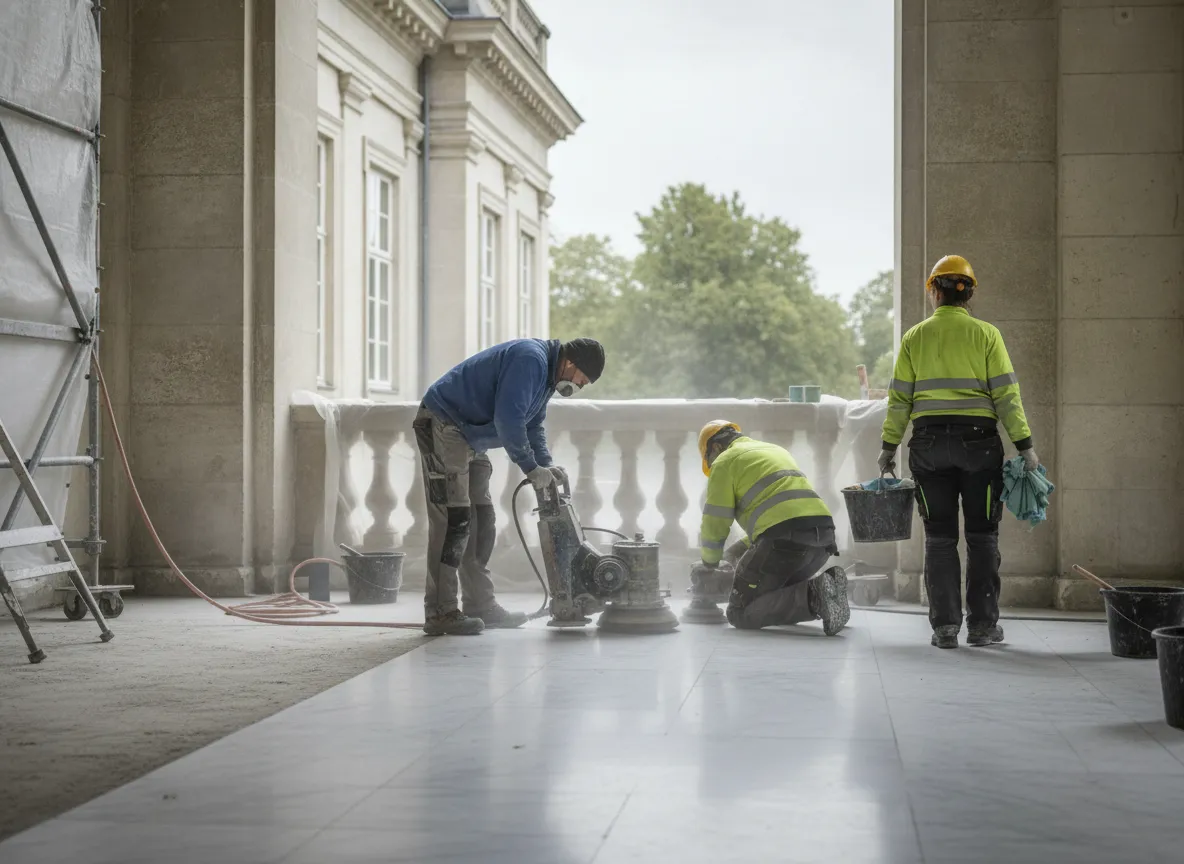
Diamond pads grind away light marks — Wet sanding removes light scratches, water rings, and scale crusts. Finer diamond pads smooth the stone step by step without chemical fumes.
Polishing brings out the chosen sheen — Fine polishing pastes and rotary pads refine the stone to a soft satin or deep gloss that highlights natural veins.
Penetrating sealer stops future water damage — Breathable sealers soak deep into tiny pores to keep out bath oils and water. Dry cloths buff away excess liquid.
Three hidden hazards for bathroom marble
Using acidic limescale cleaners
Standard bathroom cleaners eat away limestone on contact. Acid sprays leave dull chemical burns that strip stone shine within seconds. Mechanical grinding is needed to take away these etched marks.
Ignoring standing coastal hard water
High mineral content in local tap water binds tightly to stone pores when puddles evaporate. Layer upon layer of dense mineral crust forms over time, trapping dirty residue beneath it. Scraping this crust without proper grinding tears micro-chips out of the marble.
Neglecting failing perimeter sealant
Cracked silicone along shower corners lets water seep behind vertical marble slabs. Moisture trapped behind tiles causes dark deep stains and loosens glue. Fixing rot behind damp stone walls requires heavy repair work.
We cover Marbella
Restoration services cover residential properties across the western coastal area.
Polished gloss finish or soft honed matte look
A polished gloss finish reflects daylight and overhead lamps, showing off deep stone veins across walls and vanity tops. High gloss brings out the natural crystal look of pale Spanish marble types. This finish matches mirror frames and shiny brass taps, giving a neat hotel look. Shiny shower floors need extra care because smooth wet stone is slicker underfoot than rough stone.
A soft honed look provides a smooth satin feel that softens harsh light across bright master bathrooms. Matte stone hides dried water spots, light lime traces, and soap film much longer between cleans. Honed marble on shower trays offers better natural grip for wet bare feet. Matching nearby rooms is simple. This works well next to bedrooms with marble floor polishing done in a matching satin sheen.
Standard joint cleaning or complete silicone joint replacement
A full silicone renewal removes old joints along edges where steam and moisture cause trouble. Warm air lets black mould grow deep into the soft rubber. Regular surface cleaners cannot reach these roots once they take hold inside the bead. Cutting away the damaged seals and laying fresh sanitary silicone creates watertight borders along the stone panels. This stops water from running under shower trays and marble vanity tops.
Basic joint cleaning keeps good flexible seals in place when the silicone stays soft and tight. It works well if the bead shows no dark mould spots or peeling edges. Soft pads and mild soap wash the outer joint line alongside the stone tiles. This choice saves time when the main goal is fixing dull patches on vanity tops. It matches standard care steps used during marble countertop polishing to keep stone clean.
Is this what you are looking at?
Chalky white haze around shower drain
Mineral salts from evaporated hard tap water crystallise over the stone base. The crust can be smoothed away without tile damage, as long as the stone beneath remains solid.
Rough dull patches on vanity marble
Acidic cosmetic lotions and perfume droplets dissolve surface calcium. These etched spots can be polished back to an even shine, as long as the acid burns stay shallow.
Brownish water rings near basin taps
Trapped tap moisture beneath metal tap collars reacts with porous marble. These dark rings can be lifted and resealed, as long as permanent stains have not set deep into the stone.
Fine surface scratches across shower walls
Abrasive scouring pads create cloudy spider-web marks over polished panels. The scratches can be honed away to restore shine, as long as the cuts are not deep gouges.
Dark discoloured grout lines inside stall
Persistent coastal dampness feeds mildew inside tiny cracks along tile seams. The joint lines can be cleared and sealed tight, as long as water has not rotted the wall.
Your questions, answered
What happens during the restoration workday? +
Protective coverings are laid along access routes from the front door. Wet diamond machinery operates on site with water misting to capture airborne dust. Equipment is packed away and surfaces are wiped dry before departure.
How does restoration impact building neighbours? +
Grinding machines make a low hum during work stages. Working hours follow local quiet rules. Shared hallways are covered with heavy sheets when moving tools.
Does the mediterranean season affect marble restoration? +
Indoor air control allows stone work to proceed at any time of year. Summer heat dries sealer slightly faster. In winter, open windows and fans help the stone dry out fully.
How should restored bathroom marble be maintained? +
Surfaces should be wiped with soft microfibre cloths and pH-neutral stone cleaner. Avoid standard supermarket descalers, acidic vinegar mixtures, and rough scouring sponges that scratch stone.
How quickly can restoration work begin? +
Visits are booked based on seasonal schedules and property access. Standard jobs start shortly after the stone check is complete.
What happens if a restored area needs correction? +
Surfaces are inspected under bright work lights before handover. Any remaining dull spots or missed mineral marks are honed and polished again on site until the finish looks even.