Ignoring dullness and etch marks on marble countertops allows the damage to deepen, requiring more intensive and costly restoration later. Acidic spills or harsh cleaning products can permanently etch the surface, creating visible dull spots that detract from the countertop's appearance and value.
Over time, minor scratches and traffic lines on marble surfaces accumulate, making the stone look worn and neglected. This wear can make the entire kitchen or bathroom appear dated, potentially impacting property appeal if you are considering selling.
Limescale buildup in bathrooms and showers, common in areas with hard water, can obscure the marble's natural pattern and color. If left untreated, limescale can chemically bond with the stone, making it much harder to remove without specialist intervention.
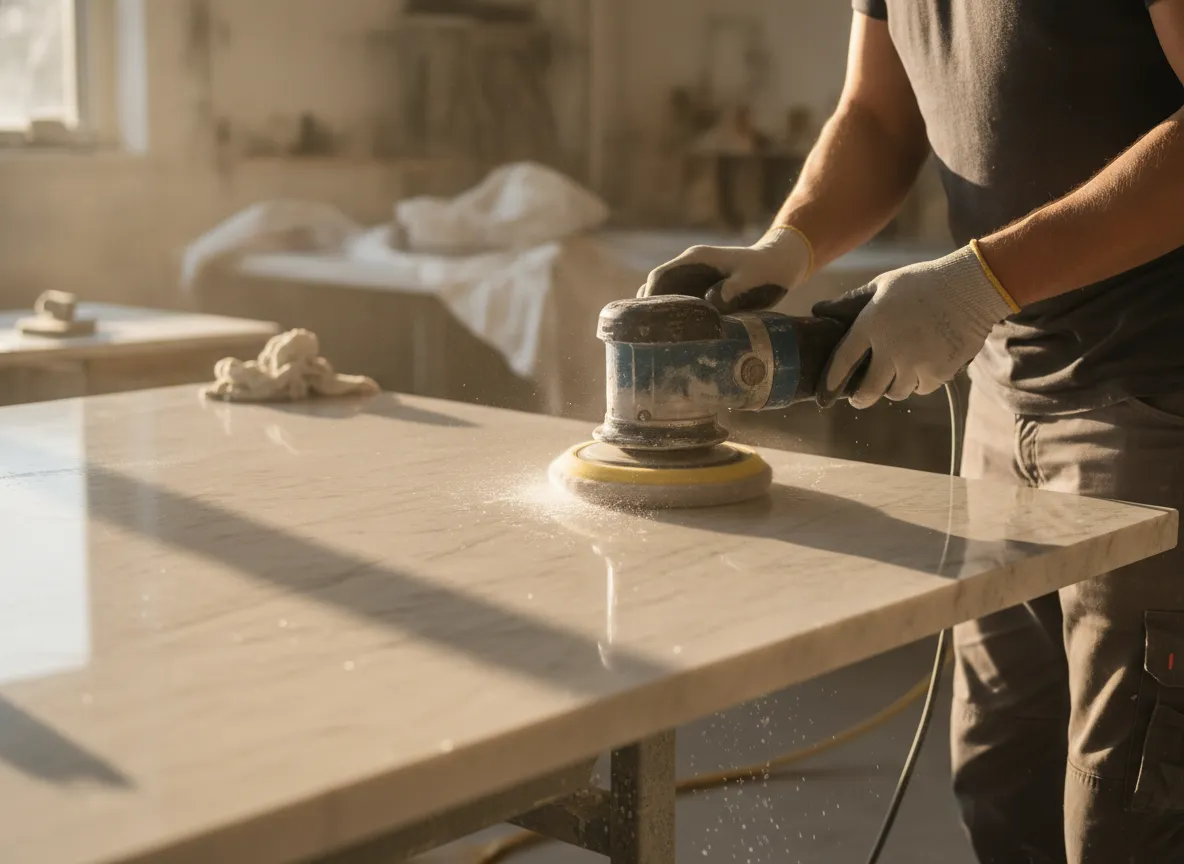
How Marble Countertop Polishing is performed
The surface is prepared — The countertop is thoroughly cleaned to remove any loose debris, grease, or surface contaminants. Any existing sealers are stripped away to ensure the polishing process is effective.
Damage is assessed and addressed — The marble surface is inspected for etch marks, light scratches, or minor chips. These imperfections are carefully honed away using progressively finer abrasive pads.
The stone is polished — Specialized polishing compounds and pads are used to bring the marble to a desired level of shine. This step restores the stone's original luster and smooth texture.
The countertop is sealed — After polishing, a high-quality impregnating sealer is applied. This helps protect the marble from future stains and makes it easier to maintain.
The area is cleaned — All dust and residue from the polishing process are meticulously cleaned from the countertop and surrounding work area. The surface is left ready for immediate use.
3 things about marble countertop polishing
Restoration over replacement
Marble loses its shine long before it wears out structurally. Polishing restores the stone's surface, eliminating dullness, etch marks, and minor scratches without the need for costly and disruptive slab replacement. This approach preserves the existing stone and its original installation.
Protection from future damage
After polishing, a high-quality sealer is applied to the marble. This protective layer helps to repel liquids and resist staining, making the countertop easier to clean and maintain. It also extends the life of the polished finish, especially in high-use areas like kitchens.
Addressing local conditions
The Mediterranean climate, with its humidity, can contribute to limescale buildup, particularly in bathrooms. Polishing effectively removes these mineral deposits, restoring clarity to the marble. This is crucial for maintaining the luxurious appearance of properties across the region, including those in Puerto Banús and Nueva Andalucía.
We cover Marbella
Natural stone surfaces are restored across the western Costa del Sol. This service covers floors, bathrooms, and worktops in villas and apartments where replacing the stone was never the plan.
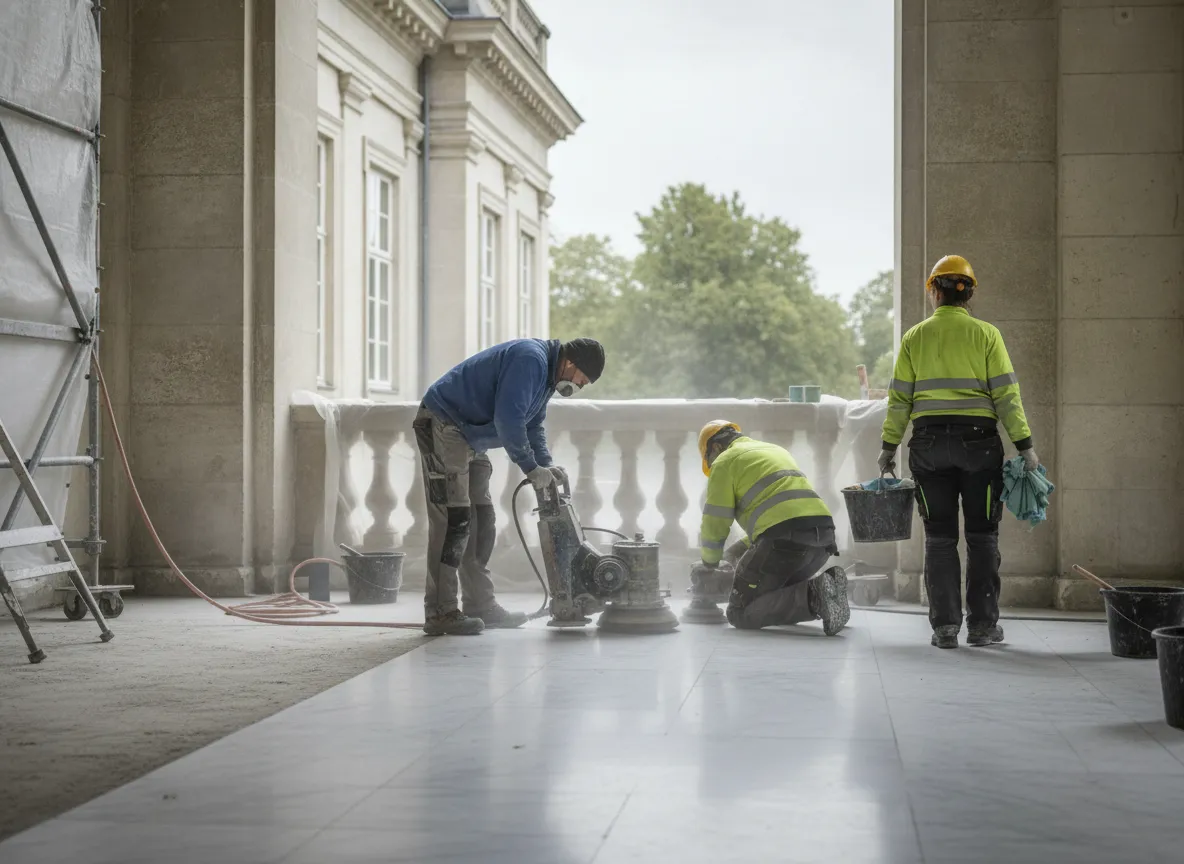
Is this what you are looking at?
Restoring surface shine
Over time, marble countertops can lose their original lustre and appear dull. This happens due to daily use and microscopic scratches. The polishing process carefully removes a very thin layer from the surface. This reveals fresh, unblemished marble underneath. The result is a renewed, reflective finish that brightens the entire kitchen or bathroom. It brings back the stone's natural beauty and depth.
Polishing kitchen surfaces
Kitchen countertops are often exposed to spills, heat, and cleaning agents, which can affect the marble's finish. Polishing these surfaces addresses general wear and restores their protective qualities. The process involves multiple stages of abrasive pads, followed by a polishing compound. This ensures a consistent, smooth surface across the entire countertop. A polished kitchen counter is easier to clean and maintain daily.
Addressing water marks
Water marks, especially from hard water, can leave visible rings or spots on marble countertops. These marks are often mineral deposits or slight etching from acidic liquids. The polishing process is effective in removing these surface imperfections. It carefully abrades the affected area to blend it with the surrounding stone. This restores an even appearance without visible stains. The surface is then buffed to a uniform shine.
Preparing for future protection
Effective polishing is also about preparing the marble for long-term protection. After polishing, the stone's pores are open and clean. This creates an ideal surface for a sealant to bond properly. Without thorough preparation, a sealant might not adhere evenly or last as long. This step ensures the marble is ready to absorb the protective treatment. It maximises the sealant's ability to resist future stains and etching.
Buffing for a smooth finish
The final buffing stage is crucial for achieving a truly smooth and reflective marble countertop. After the main polishing steps, fine abrasive pads are used to remove any remaining microscopic imperfections. This process enhances the marble's natural colours and veining. It creates a seamless, glass-like surface that feels incredibly smooth to the touch. Proper buffing ensures the countertop looks its best and is ready for use.
Your questions, answered
Can I use my kitchen or bathroom while the marble polishing is being done? +
During the polishing process, the immediate area around the marble surface will be active with equipment and materials. It is generally advised to avoid using the specific countertop or floor being worked on for the duration of the job. Access to other parts of the room might be limited temporarily, but full use can usually resume once the work is complete and the area is cleaned.
What do I need to do to prepare my home before the work starts? +
Before the polishing begins, all items should be removed from the marble countertops or floors, including small appliances, decorative objects, and any food items. Clear access to the work area is essential for efficient and safe operation. In homes around Marbella, where outdoor living is common, ensuring any adjacent patio doors are closed can help minimise dust from entering other areas.
What kind of noise, dust, or smells should I expect during the polishing? +
Marble polishing involves the use of rotary machines, which produce a moderate level of noise similar to a vacuum cleaner. While dust extraction systems are used, some fine dust may still be generated, so protecting nearby furniture with covers is advisable. The polishing compounds and sealers used typically have a mild, non-lingering scent that dissipates quickly after ventilation.
How does insurance typically cover this type of work? +
Property damage caused by negligence during the work would typically be covered by the professional's liability insurance. It is always prudent to confirm that the service provider carries appropriate insurance before work commences. Your own homeowner's insurance policy would generally cover pre-existing damage or issues unrelated to the service provided.
How can I tell if the marble polishing has been done properly? +
A properly polished marble surface will exhibit a uniform, reflective sheen without any dull spots, swirl marks, or haziness. The surface should feel smooth to the touch, and any minor scratches or etch marks should be visibly reduced or eliminated. For properties in areas like San Pedro de Alcántara, where natural light is abundant, checking the finish under direct sunlight can reveal any imperfections.
Does the time of year or season affect marble polishing? +
The time of year generally does not significantly impact the quality or process of marble polishing. However, good ventilation is beneficial during and after the application of sealers. In warmer months, open windows can help with air circulation, while in cooler periods, ensuring adequate indoor ventilation is still important for drying and curing times.
How do I maintain the polished marble afterwards, and what should I avoid? +
To maintain the polished finish, regularly clean marble with a pH-neutral cleaner and a soft cloth, avoiding abrasive pads. Spills, especially acidic liquids like citrus juice or vinegar, should be wiped up immediately to prevent etching. It is also important to avoid harsh chemical cleaners, as these can strip the sealer and damage the marble surface over time.
What can I do myself, and when should I call in a professional for marble polishing? +
Light cleaning and basic stain removal using appropriate marble-safe products can often be handled by a homeowner. However, for restoring a deep shine, removing significant scratches, etching, or extensive staining, professional equipment and expertise are required. Attempting to polish marble without the correct tools or knowledge can lead to irreversible damage.
What does marble countertop polishing typically cost? +
The cost for marble countertop polishing is typically priced per unit, starting From €150 per unit. This price can vary depending on the size of the countertop and its current condition. If there are heavy stains requiring extensive removal, an additional 10-25% may apply. For very small jobs, a minimum call-out fee of €100-€150 might be applicable.
What should I do if I am not satisfied with the finished work? +
If you are not satisfied with the finished work, it is important to communicate your concerns clearly and promptly. Document any specific issues with photos if possible, and describe what aspects do not meet your expectations. A reputable service provider will typically address any legitimate concerns and work to resolve them to your satisfaction.