How marble floor polishing is completed
Baseboards and nearby woodwork are taped — Waterproof plastic sheets and tape seal adjacent walls, baseboards, and door frames against wet stone slurry.
Floor tiles are cleared of residue — Deep cleaning strips away old wax, surface grime, and old sealers so diamond pads touch pure stone directly.
Coarse diamond pads remove scratches — Heavy floor machines run with water across the marble to level high spots and scratches. A thin top layer of damaged stone comes off evenly without making airborne dust.
Finer diamond pads smooth the floor — The floor gets worked with step-by-step finer diamond disks to remove fine sanding marks. Each pass closes the stone pores and brings out natural clarity.
Surface treatment seals the stone — The floor is buffed with fine paste or a stone hardener to set the shine. This step protects the stone face and locks in the final look.
Stone cures before daily foot traffic — The floor is dried fully, and protective tape comes off the baseboards. Normal walking can resume right away, while deep stone sealers cure over the next hours.
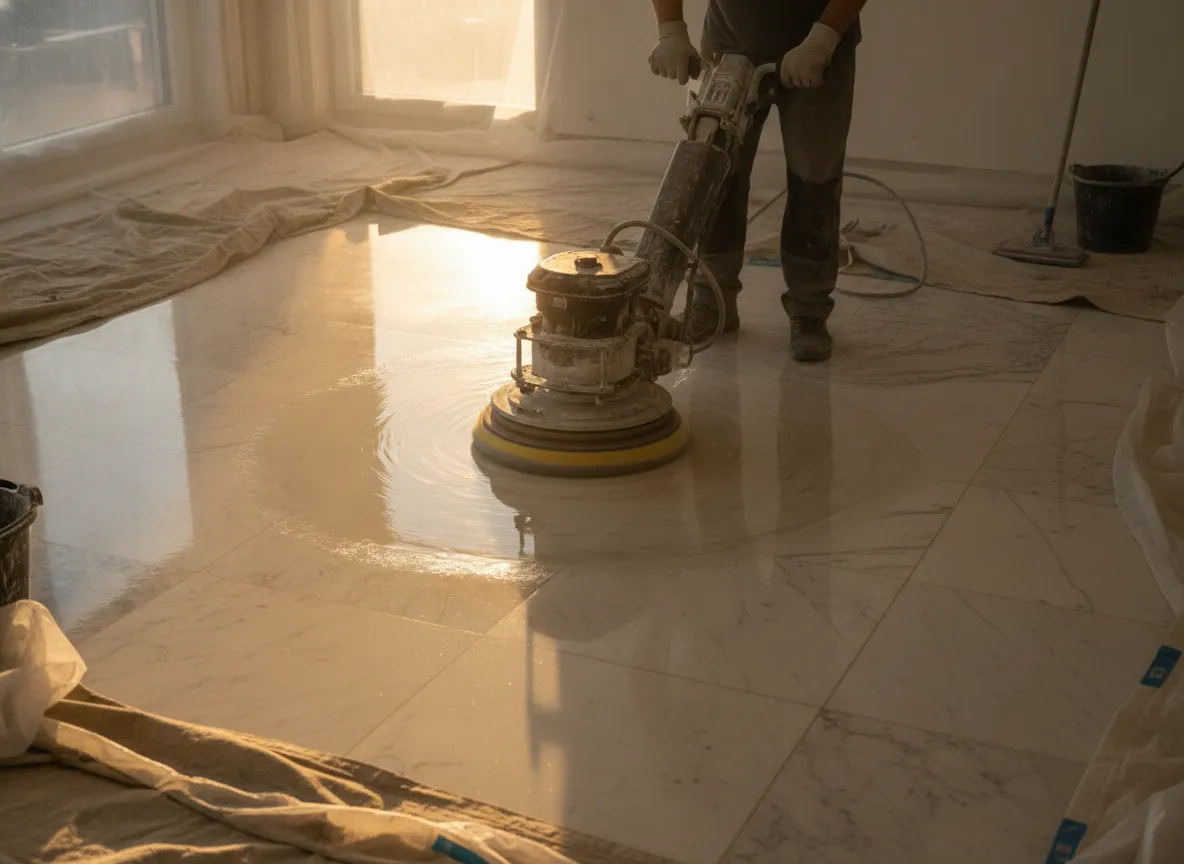
Three problems that ruin unprotected marble
Acidic liquids burn dull spots into stone
Spills like lemon juice, vinegar, wine, or acidic bathroom cleaners dissolve calcium carbonate on contact. This chemical reaction leaves a rough, bleached crater called an etch mark. Standard mopping cannot wash it off because the stone itself has dissolved.
Trapped sand acts like sandpaper under shoes
Fine grit and beach sand carried inside cut microscopic grooves into soft marble tiles. Over months of foot traffic, these tiny cuts destroy the factory shine and create dull, dark traffic paths. Postponing polishing forces deeper initial grinding later on.
Worn polishing pads leave permanent swirling
Worn buffing pads or skipped grit steps leave round swirl marks on the floor. Uneven machine speed or patchy pressure causes wavy reflections under bright sunlight. Fixing this issue requires grinding the stone again with coarser pads.
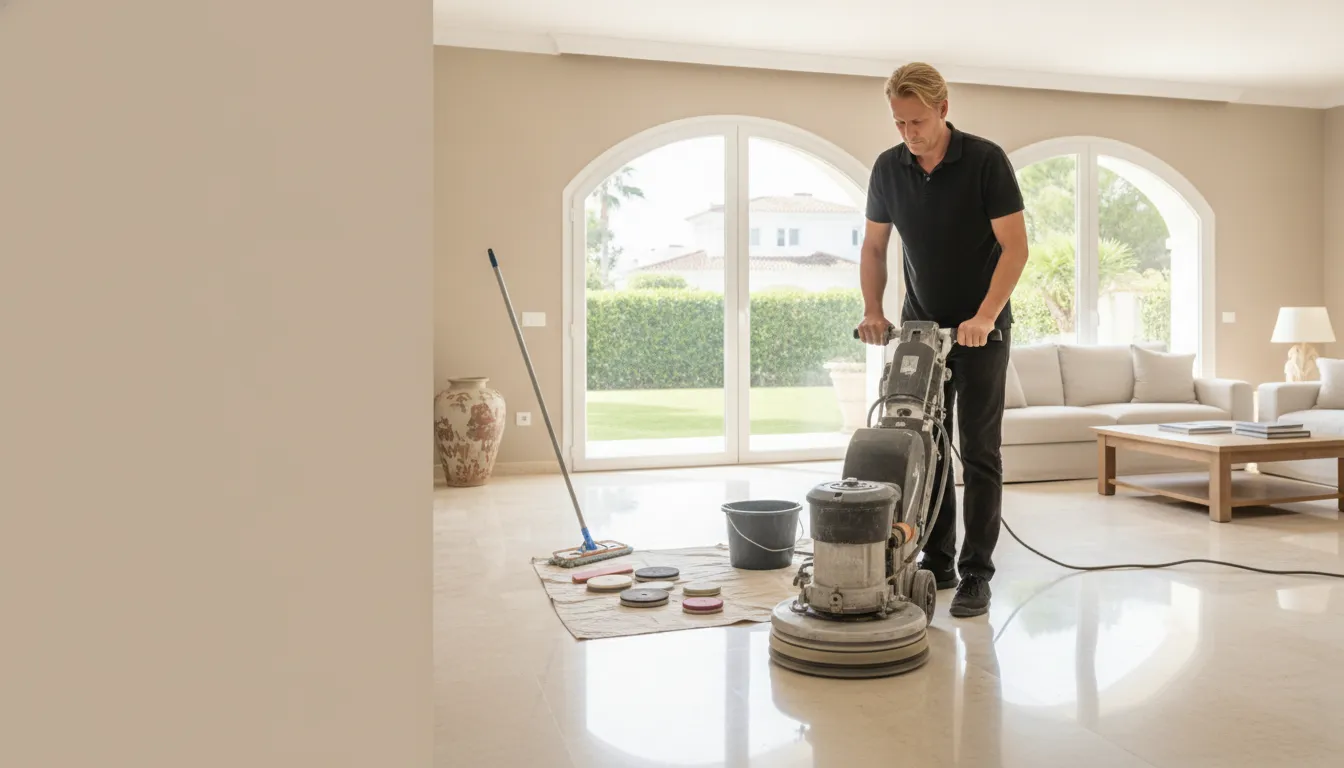
We cover Marbella
Restoration services cover residential properties, penthouses, and private estates across the entire coastal region.
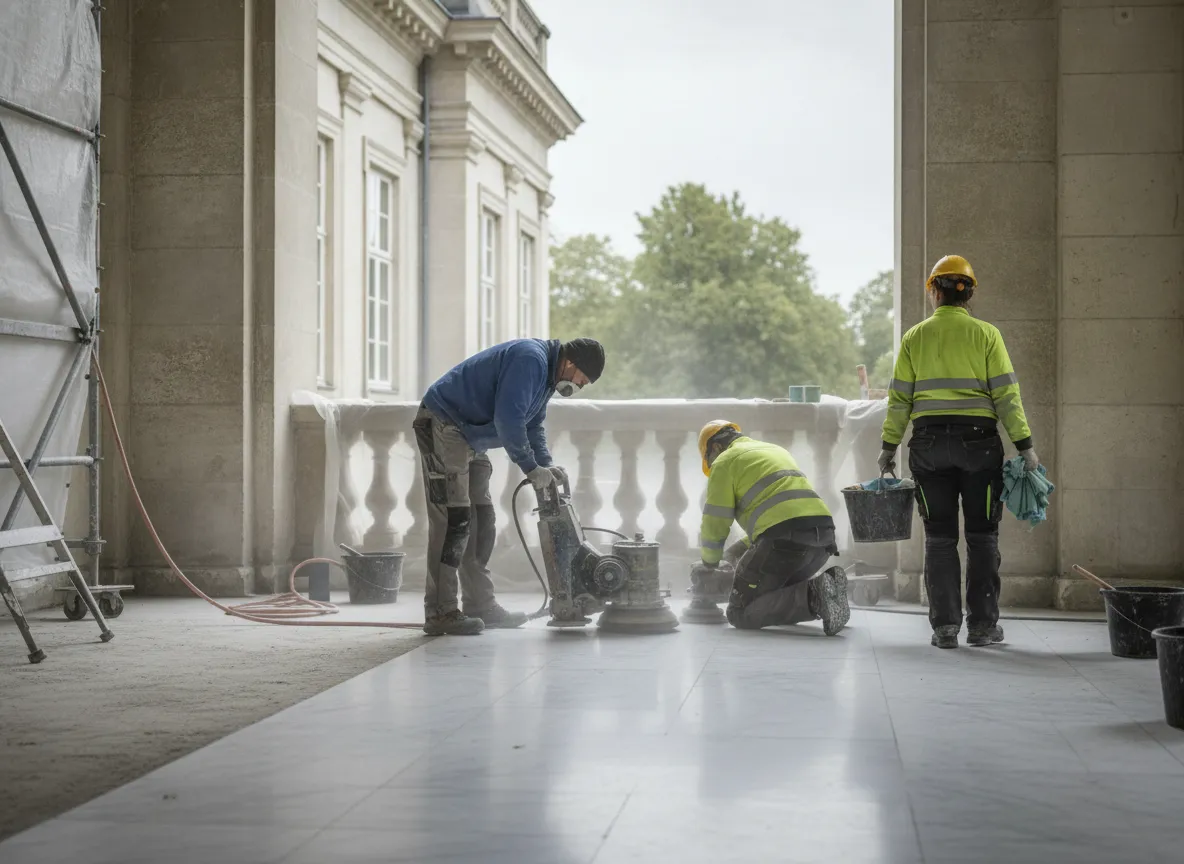
Mechanical diamond grinding or chemical surface crystallization
Mechanical diamond grinding shaves off a thin top layer of damaged marble using water and diamond pads. This physical cut levels high tile edges, flattens worn walking paths, and clears away deep gouges. The floor remains pure, natural stone that breathes freely. It will not peel, crack, or turn yellow in sunny rooms. High foot traffic and uneven tile seams make diamond grinding the lasting fix for worn floors.
Chemical crystallization relies on an acidic liquid buffed into the stone with fine steel wool pads. The acid reacts with calcium in the marble to create a hard, glassy surface film. This process creates a fast shine at a lower upfront cost. However, a chemical film cannot remove deep scratches or level out uneven floor tiles. It also seals stone pores, which can trap rising moisture inside the slab. For vanity tops and vertical walls, consider bathroom & shower marble restoration instead of heavy floor machines.
High-gloss mirror finish or honed matte finish
A high-gloss mirror finish comes from grinding with very fine diamond pads and polishing powders. This process gives the marble a shiny, glass-like face. The smooth stone bounces back direct room light, sunny windows, and garden views with sharp clarity. Colors inside the stone look rich and deep. However, this shiny face shows dust, footprints, and fine marks very easily under bright sunshine. It suits formal living areas where homeowners want a bright, formal look and do not mind frequent dusting.
A honed matte finish stops the grinding at medium diamond grit pads. This leaves the stone with a soft, satin touch without a direct shine. Sunlight spreads gently across the floor instead of creating harsh glares. The flat surface hides small surface scuffs, light dirt, and daily shoe marks much better than high gloss. Rooms with outdoor access, pets, and heavy daily foot traffic stay neat longer with a honed surface. It reduces daily cleaning while keeping the natural stone warm and smooth.
Is this what you are looking at?
Dull grey traffic paths across hallway tiles
Abrasive grit walked in from doorways scratches the protective surface over time. The dull lane can be ground smooth again, as long as sand has not cut too deep into the tiles.
White ring marks on dining room floor
Acidic liquid spills react with calcium carbonate to form raw, unpolished spots. These etch marks can be polished out completely, as long as the acid has not soaked deep into the stone.
Hazy circular swirls under direct sunlight
Worn buffing pads or skipped grit progressions leave irregular micro-ridges across the surface. These hazing circles can be ground flat again, as long as every grit level is worked in order.
Faded colour across sunlit living room
Surface grime and fine scrapes scatter natural daylight and wash out stone contrast. The lost stone colour can be restored fully, as long as dirt has not soaked deep into open pores.
Hairline crack running through adjoining floor tiles
Subfloor movement and physical impacts cause structural breaks across brittle stone slabs. The crack can be filled and polished flush, as long as the tiles stay firmly bonded to the subfloor.
Your questions, answered
How does the polishing work affect neighbors in apartment buildings? +
Rotary floor machines produce a continuous low hum and slight vibration through structural floor slabs. Work hours are coordinated with community building bylaws before starting. Waterproof masking and closed doorways prevent slurry leaks and keep shared corridors clean.
Can underfloor heating stay on during marble polishing? +
Underfloor heating must be turned off before work starts. Cool stone keeps water from drying out too quickly during wet grinding. Warm tiles cause stone paste to stick firmly to the surface before it can be washed away.
How does insurance typically apply to marble floor restoration? +
Home insurance often covers sudden impact damage, water leaks, or stains from burst pipes. Slow wear from foot traffic and dull spots from daily spills count as routine care. Insurance firms check reports to see if the stone needs new tiles or just surface grinding.
How do you check if marble polishing was done properly? +
Reflected window frames and ceiling lights appear straight and sharp across every tile. Looking across the floor against natural light reveals no circular swirl marks, cloudy patches, or rough lippage edges. Running a dry hand across tile seams confirms a flat, uniform plane.
What happens if extra damage is discovered during work? +
Finding loose floor tiles or deep oil stains stops grinding on that spot right away. The condition of the slab gets checked before any more work is done. The plan is updated to fix the damage before final polishing continues.
What happens if areas show dull patches after drying? +
Dull spots or patchy shine mean a tile did not get enough grinding passes. The dull spot is ground again with the right diamond pad. Then it is polished until it blends in with the surrounding floor.